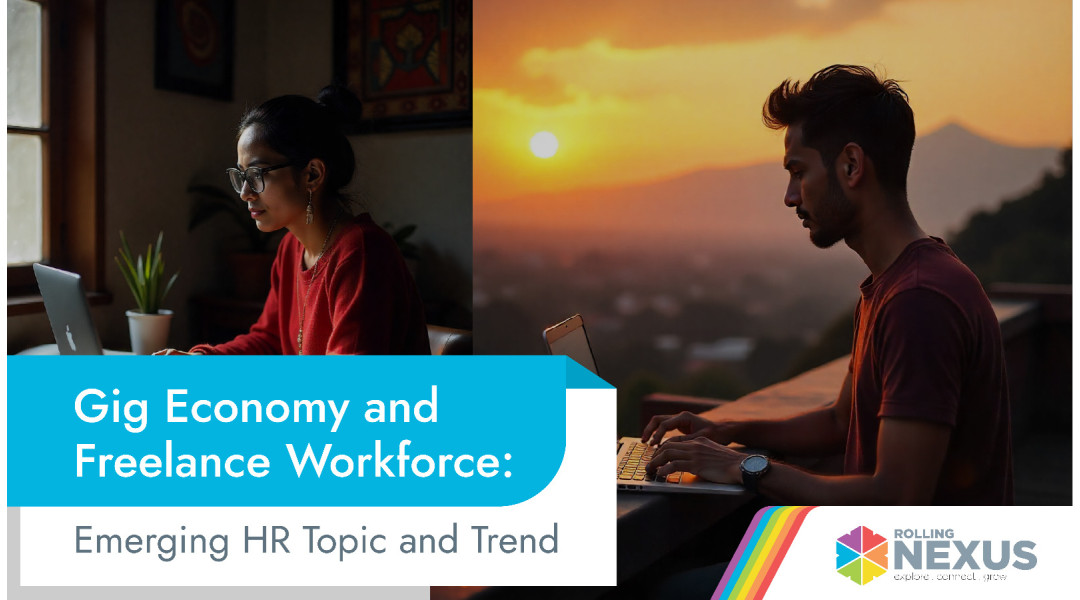
A sense of security, along with numerous benefits, motivates individuals to pursue permanent 9-to-5 jobs. Clear-cut incentives with benefits of insurance and pension drive people to take on permanent jobs. To grab that one job, individuals give their best from written examinations to the final interviews, and after getting that job, they're assured about their job security with further advantages. But the time has changed. There is no doubt that people are more inclined towards permanent 9-to-5 jobs that have adopted hybrid work modules and online/remote working as well after the outbreak of the COVID-19 pandemic. Now, the trend of the gig economy and freelancing has been gaining attention among working individuals. With the kickoff of digital marketplaces like Upwork and Freelancer in the early 2000s, freelancing has become a growing segment in the market.
The gig economy refers to the labor market that involves short-term contracts based on freelancing work or project-based assignments with part-time commitments rather than full-time permanent jobs. Through the digital platforms, labor is exchanged in terms of money backed up by a payment-by-task basis, requiring short-term involvement. Food delivery apps such as Bhojdeals, Foodmandu in the context of Nepal, ride-hailing apps like Pathao and Indrive, and others like holiday rentals also fall under the category of gig economy and freelancing. Likewise, part-time jobs such as content writing, digital marketing, translation, data entry, etc, are very popular under freelancing. According to the World Economic Forum, the gig economy had an estimated market size of $556.7 billion, which is expected to increase to $ 1847 billion, that is triple the present data. With the changing job dynamics and new digital technology, individuals prefer flexible tasks with variable income, and freelancing platforms have helped to connect businesses with the workers who are paid for their task assignments.
There are multiple reasons for the popularity of the Gig economy. Some of them are:
i) Easy Internet accessibility with flexible working arrangements
ii) Alternative job option after 9 to 5
iii) Remote working with independence
iv) Easy networking and more
One of the pushing factors behind the growth in Gig economy is the 2008 financial crisis that worked as a catapult for the individuals to indulge in the gaining of peripheral income after massive job losses. And the companies like eBay's introduction to digital platforms motivated freelancers and temporary workers to step into gig platforms, and slowly, multiple platforms of freelancing emerged as the job marketplace, enabling the freelancers to pursue temporary jobs with handsome pay. Gig workers are often called independent contractors who can work easily, maintaining work schedules without permanent commitments to the work.
Let's dive into the catbird seats (pros) of the gig economy and freelancing that push the workforce for their involvement.
One of the main pros of freelancing is choosing your work schedules and methodologies along with projects that match the individual’s skills, interests, and sector of professionalism. Individuals can maintain greater autonomy over their work schedules, which helps them tailor work-life balance, leading to job satisfaction and mental well-being.
In the palm of the individual, the options of the project reside, with just one swipe and touch, the individual can be involved in various projects. The person has multiple choices for exposure to diverse working environments. Along with the diversification of industries, a person can get plenty of experiences and knowledge with professionalism and access to multiple growth opportunities. Across the boundaries, gig workers can collaborate with international companies, paving the way to career growth and opportunities.
For the companies, they can hire a diverse workforce globally, integrating a DEI perspective, driving competitive advantages with justified solutions. One of the pros for the companies is no requirement for long-term incentives and benefits to permanent employees. Based on project requirements, they can hire individuals for project demands and do layoffs in their slower projects.
Based on project demands, businesses can scale their employees, i.e., a freelance workforce. There is no requirement to spend on long-term remuneration and traditional jobs’ benefits like insurance and pension. Gig workers can become innovators by using their skills on diverse projects. With flexible working structures, both the employees and businesses can cope with the new challenges and market conditions, taking advantage of trending opportunities for growth and productivity.
Freelancing not only provides a greater professional platform for the workers, but they can utilize their skills, plus they can learn new perspectives. For businesses, they can hire people with diverse skill sets for a wide range of projects. Along with multiple benefits for both gig workers and businesses, there are underlying challenges in the gig economy, such as:
i) Job security for gig workers
ii) Benefits in 9- 5 jobs like insurance, healthcare, pension plans, etc
iii) Risks of financial instability due to seasonal involvements
iv) Legal risks for businesses
v) Unmatched wage distribution
vi) Tax obligations and others
With the abundance of digital freelancing platforms like Upwork, Taskrabbit, Fiverr, and Freelancer, people from any corner of the world can connect with hiring businesses who are looking for the perfect fit for their project assignments. It's estimated that the global online freelancing market is growing by 10 to 15 percent on an annual basis. Also, the Future of Work report has stated that 50% of the global workforce will be participating in the gig economy by 2030. So the market is huge. From drivers to consultants, everyone can set foot on this platform. With the supplemental income on one hand, skill development comes as a 2nd benefit for workers. And for businesses, from hiring expenses to recruiting, the costs are minimized. So it is like a win-win situation for both. With the emerging trend and technology of AI, augmented and virtual reality, and Internet reach, the market of the gig economy tends to compete fully with conventional employment models.