
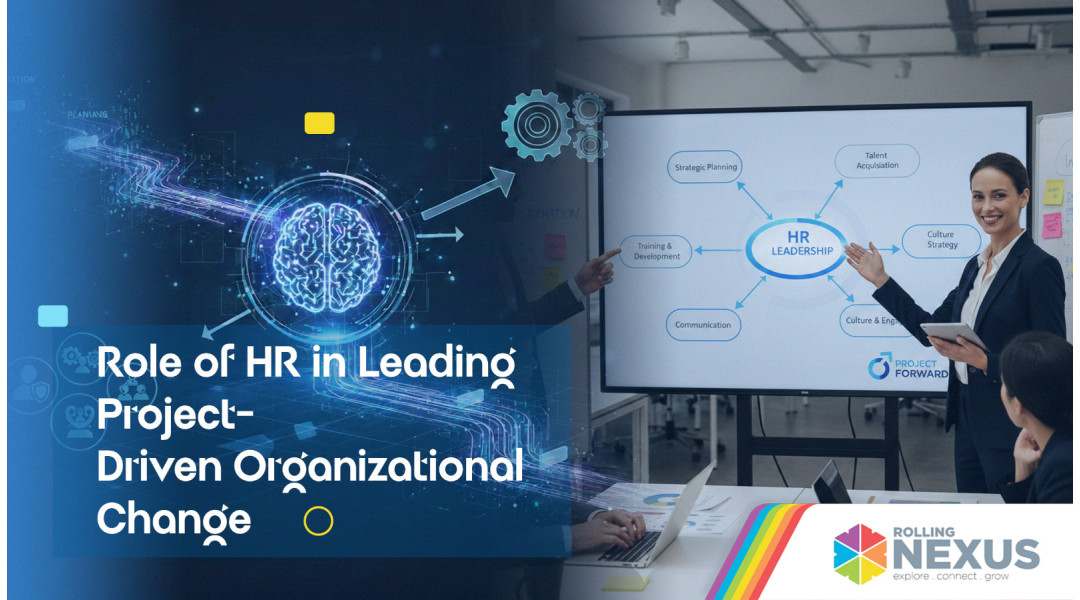
In today’s fast-paced, evolving business landscape, organizational change is no longer reactive; rather it has become strategic. Whether driven by digital transformation, regulatory reforms, foreign investment, restructuring, automation, cultural shifts, or expansion into new markets, change is increasingly executed through structured, time-bound projects. These project-driven transformations are designed to increase efficiency, competitiveness, and long-term sustainability.
Yet, many organizations underestimate one critical variable: People, aka Human Resources. Transformation challenges rarely arise from flawed strategy or technology failure. Instead, they emerge from leadership misalignment, unclear communication, skill gaps, cultural resistance, or employee disengagement. In other words, projects get trembled when the human dimension is not managed with intention. This is where HR transitions from an administrative function to a strategic transformation partner.
Nepal’s corporate environment is shifting rapidly. Since the outbreak of the COVID-19 pandemic, digital banking, data-driven decision-making, hybrid workforce models, and private-sector modernization are reshaping traditional operating models. Large-scale projects are now common across industries, from financial institutions to hospitality businesses, manufacturing, and development sectors. However, research globally continues to indicate that a significant percentage of transformation initiatives fail to deliver full value. The primary reason is not technical inadequacy, but insufficient attention to change management and workforce readiness.
Project-driven change typically involves:
Each of these dimensions directly impacts employees/human resources. When organizations approach change solely from an operational lens, they create friction. When they integrate HR strategically, they create alignment. Forward-looking or proactive organizations in Nepal are increasingly recognizing that HR consulting and change management expertise must be embedded at the project planning stage, but not introduced midway through implementation.
For C-suite leaders, the most important question should be “Can we implement this project?” but “Is our workforce/human resource/manpower ready to sustain it?” HR contributes to project governance by evaluating the broader workforce implications of strategic decisions. During early planning phases, HR typically examines these questions:
When these questions are addressed proactively, risk exposure decreases significantly. Organizations avoid costly reworkings, morale decline, and turnover spikes that often accompany poorly managed change. In Nepal’s context, where talent retention and capability development remain ongoing challenges, this proactive approach is particularly critical.
Every transformation project introduces risks and uncertainty. Even positive change can trigger resistance when employees feel excluded or uninformed. Senior executives may view a digital transformation as progress, while employees may perceive it as disruption. The role of HR in organizational change management is to anticipate these psychological and operational responses.
Effective HR-led interventions include:
In Nepalese organizations, where hierarchical structures remain prevalent in many sectors, silent resistance can be more common than open disagreement. HR’s ability to create safe channels for feedback becomes essential in preventing disengagement. So, open feedback mechanisms should be introduced in the organizations.
In transformation initiatives, communication is not merely informational; it is strategic and purposeful. Executives or leaders often assume that one announcement is sufficient. In reality, effective communication during project-driven change must be consistent, transparent, and layered. Employees need clarity around three central themes:
1. The strategic rationale behind the change.
2. The impact on their roles and career paths.
3. The support available during transition.
HR consulting teams typically design structured communication frameworks that include leadership briefings, manager toolkits, FAQs, and feedback mechanisms. When leaders communicate with clarity and authenticity, then uncertainty declines and trust strengthens. In Nepal’s business environment, where personal relationships and organizational loyalty play significant roles, trust remains a crucial factor in the successful adoption of change.
Transformation without skill development and potential training programs creates operational risk. As organizations in Nepal adopt new technologies and modern management practices, capability gaps become visible. The roles and responsibilities of HR managers extend beyond training delivery. It involves designing integrated workforce development strategies aligned with project timelines.
This often includes:
For Nepalese companies seeking to compete regionally or attract foreign partnerships, workforce sophistication is no longer optional. HR ensures that transformation projects elevate capability rather than expose weaknesses.
Managers act as a bridge between strategy and execution. If they seem confused or unprepared, there is a high chance of an increase in employee anxiety. HR equips leaders with both technical understanding and emotional intelligence to navigate transition effectively. Leadership support during project-driven change typically includes:
In Nepal, where leadership styles are evolving from directive to participatory models, this shift is particularly significant. HR helps leaders move from command-and-control approaches toward engagement-driven change leadership.
Culture determines whether change is temporary or permanent. For example, a company implementing agile methodologies cannot sustain transformation if decision-making remains rigidly hierarchical. Similarly, organizations introducing hybrid work models must cultivate trust and accountability norms. HR acts as a cultural steward by embedding transformation objectives into:
Rather than allowing projects to disrupt identity, HR ensures they strengthen it. In Nepal’s growing private sector, where organizational culture increasingly influences employer branding, this alignment becomes a competitive advantage.
Successful transformation extends beyond implementation milestones. Once the project is operational, the real test begins, i.e., adoption. HR plays a critical role in measuring sustainability through both qualitative and quantitative indicators such as employee engagement scores, turnover trends, performance metrics, and feedback loops. Organizations that invest in post-implementation monitoring experience higher long-term returns on transformation initiatives. Continuous listening mechanisms ensure that emerging challenges are addressed before they escalate. For C-suite leaders, this means transformation becomes measurable not only in financial outcomes but also in workforce stability and productivity gains.
The role of HR in Nepal is undergoing a fundamental shift. Progressive organizations are no longer viewing HR as a support or administrative function focused solely on compliance and administration. Instead, HR is becoming a strategic advisory function deeply involved in business continuity, digital transformation, and workforce planning.
As Nepal’s economy continues to modernize and integrate into global markets, organizations that prioritize strategic HR leadership will be better positioned to adapt, innovate, and compete. Project-driven organizational change is complex, resource-intensive, and high-risk. However, its ultimate success depends less on technology and more on people.
HR serves as the bridge between strategic ambition and workforce execution. By integrating change management, communication strategy, capability development, leadership alignment, and cultural stewardship, HR ensures that transformation is not merely implemented, but it is also embraced. For Nepalese organizations navigating modernization, digital acceleration, and competitive pressure, the message is clear: transformation cannot succeed without strategic HR involvement. Projects may initiate change. But it is people guided by the strong HR leadership who sustain it.