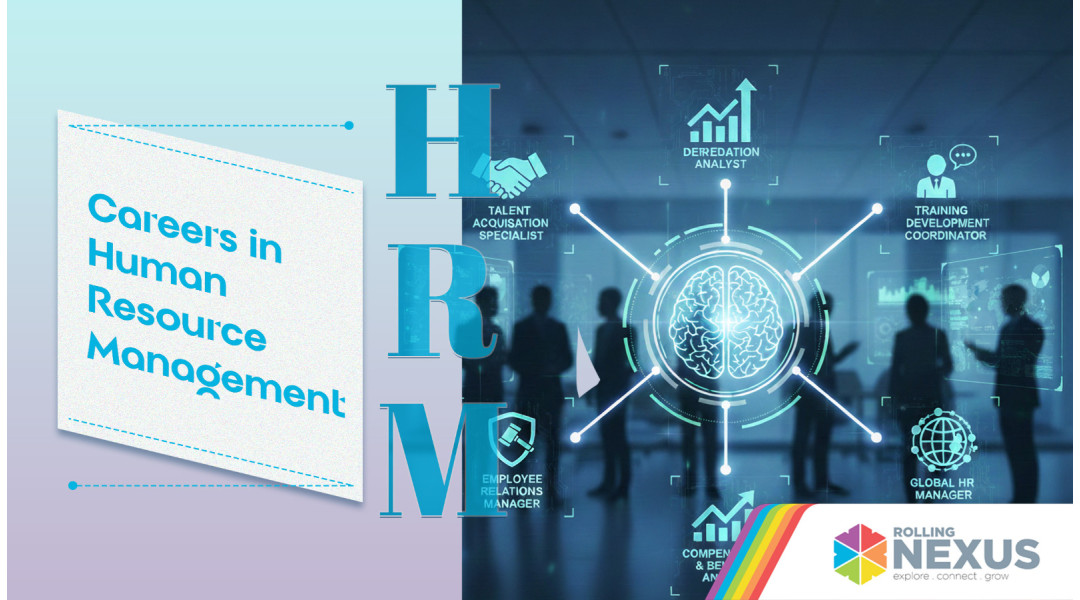
With the amalgamation of various departments within the organization, it takes on its final form. An organization is complete when all its departments function according to their designated tasks and responsibilities. And the Human Resources (HR) department, like others, is the soul of any organization. The HR sector involves planning, organizing, and managing the human resources of the entire organization. Indulging in Human Resources Management (HRM) can be a rewarding career if one has the passion to commit oneself to learning and development, management, and assistance during the employee life cycle. Based on the industry and sector, the functions of HRM may vary, but in general, it involves the activities of recruitment, hiring, maintaining employees’ wellbeing, training and development, building a diverse and positive work culture environment, managing payroll and compensation, and others.
Human capital is the major component of any organization. HRM includes identifying, managing, coordinating, and dealing with the human capital for the primary motive of the fulfillment of organizational objectives. Generally, there is a misconception that HR managers or HR assistants are the only careers that people with a specialization in HRM can enroll for. But there are plenty of rewarding careers within HRM that are practiced internationally. And such positions need to be developed in national or local level scenarios as well, per the need and sector of the organization. But what should a person keenly interested in enrolling in an HRM career do at first?
i) Pursue a graduate degree with specialization in HRM. Postgraduate education is also necessary for senior-level positions.
ii) Try to build an extensive experience in the industry by starting from the entry level, and networking with HR professionals will be beneficial.
iii) HR certifications such as Professional in Human Resources (PHR) and Senior Professional in Human Resources (SPHR) issued by HR Certification Institute and SHRM Certified Professional (SHRM-CP) issued by SHRM can be fruitful for establishing oneself in the industry.
iv) The HRM skills are mandatory to excel in an HRM career, including interpersonal skills, teamwork, conflict resolution, multitasking, decision-making, technological aptitude, problem-solving, and many more.
Let’s dig into some of the careers in Human Resources Management (HRM) that HR enthusiasts can pursue after their interests and educational qualifications.
It is an entry-level job in the HRM sector. It generally involves the administrative and personnel action tasks in the HRMS, such as hiring, salary adjustments, position eliminations, payroll updates, and other day-to-day activities of the HR, executives, employees, and the whole organization. For this, the newbies should have communication skills with in-depth knowledge of administration and support.
HR Manager is responsible for planning, organizing, managing, and coordinating the administrative tasks of the HR department, which includes recruitment, learning and development, payroll, compensation, employee relations, employee grievances, benefits programs, HR budget, and many more. He/she should carefully address that the HRM activities are compliant with the existing employment rules and labor laws. He/she should also report on the HR metrics, and they are the ones who have extensive knowledge of the industry with relevant educational practices regarding human capital. They should have the best strategic thinking and leadership skills, with enough knowledge of business acumen.
As the name says, a benefits manager is responsible for crafting, designing, and conducting employee benefits programs and packages, including health and life insurance, retirement options, employee wellness and mental health programs, nutritional classes, and more. They work closely with other departments and vendors to introduce the benefit programs for the employees to maintain a healthy workforce and motivated employees in the organization.
A benefits administrator is the entry-level position of HRM. A benefits manager is the ultimate position regarding benefits, whereas a benefits administrator oversees the selection of employee benefits for newcomers and other employees who are experiencing life-changing events such as marriage, children. He/she is also responsible for making the employees understand the benefit options and their advantages so that they can make decisions to enroll for the benefits.
Under the leadership of the training manager, the training coordinator designs and implements the employee training programs regarding various topics such as professional and personal development programs, technology introduction training, and many more. The training may take place based on on-site instructions or online platforms as well.
The Training Manager is solely responsible for crafting and developing training and educational platforms for the human resources of the organization. Under the training manager, training coordinators and other volunteers are occupied. The learning management system is administered by the training manager and decides on what kind of training is suitable for the employees for their betterment, both personally and professionally.
A payroll specialist is responsible for the management of the payroll of the employees of the organization. From necessary deductions to increments in the salary schedules, the payroll specialist processes all the salary administration tasks. From dealing with banking and financial institutions, he/she also take the responsibility of dealing with income taxes and other required processes.
The person is accountable for the resolution of the conflicts among the people in the organization. From addressing employee grievances to building employee relationships, the employee relations manager has to deliver exceptional performance in maintaining professional and positive relationships among the employees.
Project management, including managing human resources, comes as the prime duty of the HR project manager. He/she is responsible for planning, organizing, and managing the whole project along with teamwork and resource allocation so that the project gets completed on time without any unnecessary hassles. He/she should have sound knowledge of project management tools, HR management, and communication skills to take up this position.
Many people apply for the vacant positions, but based on their qualifications and relevant experience, a suitable candidate must be chosen for the respective job position. The duty of a talent acquisition specialist is to choose the best candidate for that role that matches the organizational needs. He/she is responsible for choosing, interviewing, hiring, and onboarding the employees who are best suited for that specific role that the organization is willing to hire for. They should also work to retain the employees and maintain a positive work environment. They should have profound knowledge of HR tools, systems, DEI culture, and talent management so that the right talent gets endorsed at the right place at the right time.
Apart from these HRM career choices, there are other positions that HR enthusiasts may get interested in, such as:
i) HRIS Specialist
ii) HR Administrator
iii) Compensation Specialist
iv) HR Director/Chief Learning Officer
v) Director of Total Rewards
vi) Chief Human Resources Officer (CHRO)
vii) Talent Manager
viii) Organizational Development (OD) Specialist
ix) HR Consultant
x) HR Business Partner and others
There may arise several other HR career options that may evolve with time and technology trends. HRM careers are rewarding if one has the potential to work along with human capital, possessing HRM skills. According to one’s interest, capability, and enthusiasm to work in the HRM sector, one can choose the best suitable career option for oneself. Good LUCK!