
As organizations expand, diversify, and adapt to changing market conditions, one challenge tends to emerge quietly but persistently, namely, a lack of clarity around roles. Job titles begin to proliferate, responsibilities start to overlap, and employees often struggle to understand their standing and how they can grow both personally and professionally. While these issues may seem operational at first, they often stem from a deeper structural gap in the organization, and this is where job architecture comes into the limelight.
Job architecture is not just an HR tool or a documentation exercise. It is a foundational framework that defines how job roles are structured, how they are interrelated to each other, and how employees move across different levels within an organization. When the job architecture is designed effectively, it brings clarity, consistency, and fairness into the workplace that are critical for long-term organizational success.
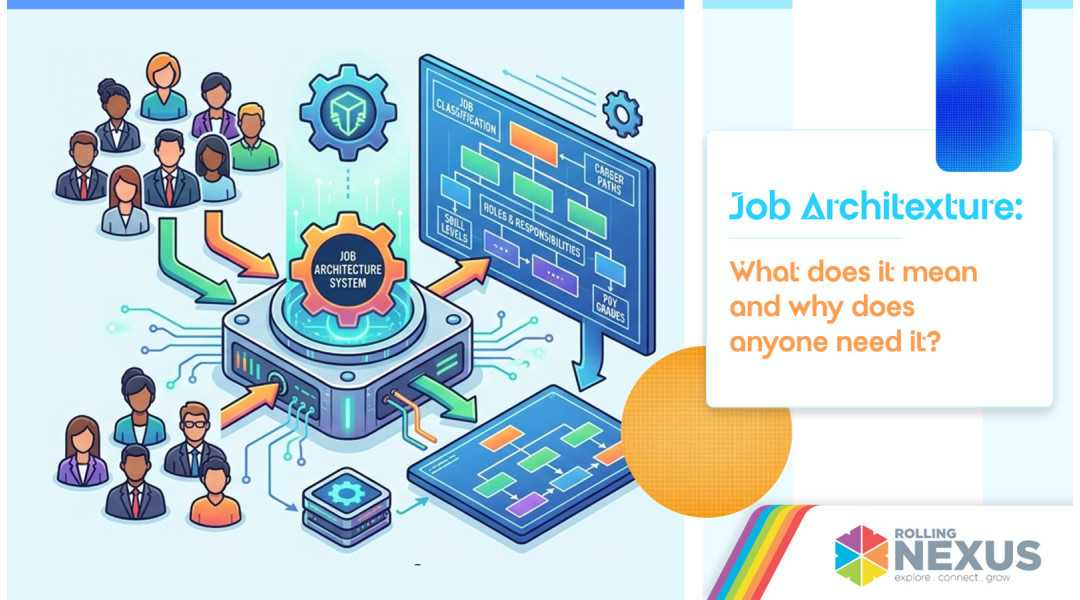
Job architecture is a system that organizes all jobs within an organization into a coherent structure. It ensures that roles are not created in isolation but are instead aligned with a broader framework that reflects the organization’s strategy and operational needs.
Key Components of Job Architecture
A well-developed job architecture usually includes several interconnected elements that work together to create a structured system:
In the early stages of an organization, roles are often flexible and loosely defined. Employees take on multiple responsibilities, and titles may not carry significant meaning. While this flexibility can be beneficial in the beginning, it becomes increasingly difficult to sustain as the organization expands.
Without a structured framework, several challenges begin to surface. These challenges are not always immediately visible, but over time, they start affecting performance, engagement, and decision-making. Organizations that lack job architecture often experience:
Below are the reasons why job architecture is essential for organizations:
One of the most immediate benefits of job architecture is the clarity in roles and responsibilities. When employees understand exactly what is expected of them, they are more confident in their work and more aligned with organizational goals. A structured framework helps organizations:
This clarity not only improves individual performance but also enhances team collaboration. Teams can work more effectively when there is a shared understanding of who is responsible for what.
Compensation is one of the most sensitive aspects of any organization. Even small inconsistencies can lead to dissatisfaction and a decline in trust. Without a structured approach, compensation decisions may be influenced by historical factors, negotiation skills, or managerial discretion rather than the actual value of the role. Job architecture addresses this issue by creating a clear link between job levels and compensation. Through a structured system, organizations can:
When employees perceive compensation as fair and transparent, it strengthens trust and reduces the likelihood of dissatisfaction.
In today’s work environment, employees are not just looking for stability; they are looking for growth. One of the most common reasons employees leave organizations is the lack of visible career progression. Job architecture plays a critical role in addressing this concern by mapping out clear pathways for advancement. A well-defined structure helps employees understand:
When employees can see a clear future within the organization, they are more likely to stay engaged and committed.
Job architecture is not limited to defining roles; it also enhances several core HR functions. By providing a structured framework, it allows organizations to manage talent more effectively and strategically. The impact on HR key processes with job architecture is enumerated below:
This alignment transforms HR from a reactive function into a strategic partner that supports business growth.
As organizations scale, they inevitably go through phases of expansion, restructuring, or transformation. During these periods, the absence of a clear job framework can create uncertainty and resistance among employees. Job architecture provides stability during change by offering a consistent reference point. It allows organizations to introduce new roles, redefine existing ones, or restructure teams without losing clarity. A strong job architecture enables organizations to:
This structured approach ensures that growth remains organized rather than chaotic.
There is a common perception that job architecture is only relevant for large corporations with complex hierarchies. In reality, organizations of all sizes can benefit from the job architecture. For smaller and medium-sized organizations, implementing job architecture early can prevent many structural challenges in the future. It allows them to grow in a more organized manner, ensuring that new roles are created within a consistent framework.
Smaller organizations do not need highly complex systems. A basic structure can include clearly defined job families, simple role descriptions, and a few distinct job levels. Over time, this framework can be refined and expanded as the organization grows.
Initial Steps to Build Job Architecture
For organizations that have not yet implemented job architecture, the process may seem complex. However, it can be approached in a practical and phased manner. The first step is to assess the current state of roles within the organization. This involves identifying existing positions, understanding their responsibilities, and recognizing overlaps or inconsistencies. Organizations can begin building job architecture by:
Job architecture is often viewed as an internal HR initiative, but its impact extends far beyond HR. It influences how organizations operate, how decisions are made, and how employees experience their work environment. It is not merely about organizing job titles; it is about creating a system that connects roles, performance, and rewards in a meaningful way. Organizations that invest in job architecture are better equipped to manage growth, retain talent, and build a culture of trust and accountability.
Ultimately, when employees understand where they stand and where they can go, they are more engaged, more productive, and more committed to the organization’s success. And that is what makes job architecture not just important, but indispensable for both human resources and organizations.