
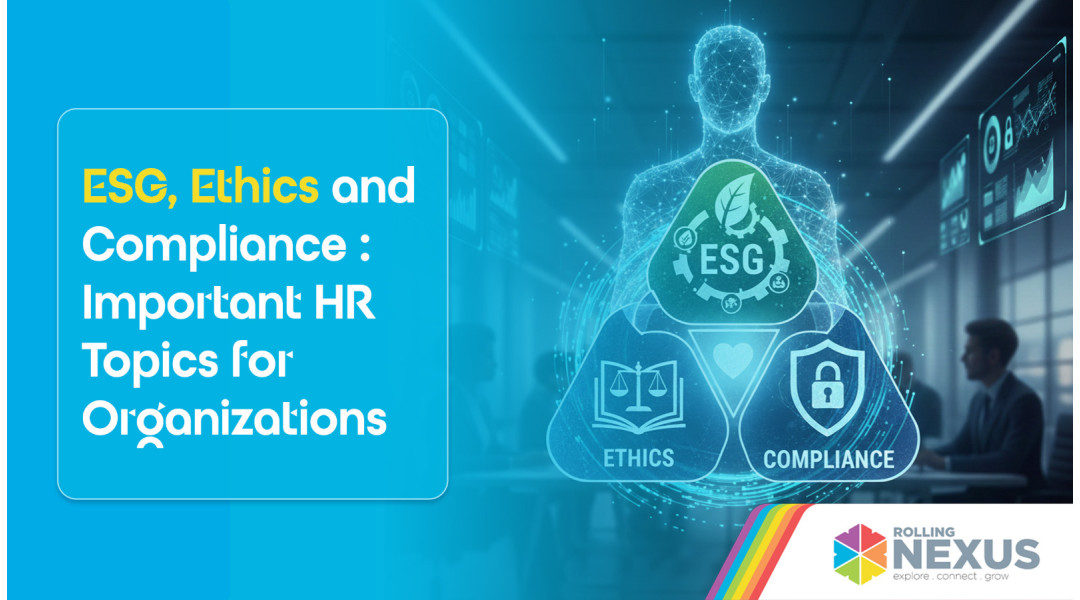
Recruitment, hiring, payroll management, and employee performance are core HR responsibilities. The Human Resources Department ensures these functions operate efficiently. In addition, we will examine ESG, Ethics, and Compliance—three closely linked areas. ESG (Environmental, Social, and Governance) factors have become a critical business imperative, mandated by certain laws and standards. Today, ESG is intertwined with ethics and compliance, impacting organizational reputation, risk mitigation, and market competitiveness. As a result, ESG performance is now central to business operations.
These three topics- ESG, Ethics, and Compliance are the fundamental factors for businesses to maintain trust and credibility towards stakeholders, creating a diverse, equitable, and inclusive work environment within the organization. Organizations considering ESG, ethical practices, and compliance not only create a positive brand image amongst the industry but also possess the strong competency to mitigate the potential risks, ensuring long-term business growth, success, and sustainability. From the very first phase of hiring to the termination of the employee, the HR policies should be driven by these prominent factors that ensure transparency, compliance, diversity, and inclusivity in the workplace for a fair work environment.
ESG strategies guided by ethical practice and compliance enable organizations to turn sustainability goals into measurable outcomes. HR is pivotal in embedding these factors through training and development programs. Facing global challenges such as climate change, social inequality, and stricter regulations, ESG, Ethics, and Compliance have become essential HR concerns for defining corporate strategies. Today, HR must actively align the ESG framework with broader sustainability objectives.
When organizations adopt an ESG framework backed up with DEI and environmental sustainability goals, ethical governance, and compliance responsibilities, these factors influence the working environment of the organizations that fall under the HR domain. As these factors are considered important concerns, they have to be incorporated under critical business strategies, and the responsibilities of HR are subsumed as:
i) Data Collection: HR must gather accurate data on workforce arrangement, employee engagement, DEI metrics, training and development programs, and many more.
ii) Reporting: HR needs to maintain ESG reports subject to the external audits, with the requirement of meeting the quality standards.
iii) Establishing cross-functional teams: HR must coordinate with various departments, including finance, compliance, and IT departments, to collect the information and do reporting. HR can assist in establishing the cross-functional teams for robust and actionable work policies.
iv) Integrating policy framework: HR should enhance the workplace policies by implementing ESG, ethical, and compliance strategies into them. HR should update the codes of conduct and recruitment policies by introducing the ESG policy framework.
The importance of these three topics’ integration into the organizational system can be briefly explained by the following major points:
HR can create a robust workplace culture with the ESG strategies that align with all the stakeholders, employees, and customers, maintaining trust and credibility in the market. The responsible organization always has a positive brand image and a positive brand reputation, meaning brand loyalty from the customers and increased stakeholders’ trust, leading to more businesses to come further.
When the organizations seem socially and ethically responsible, they attract potential and young talents that share the same values of DEI, good governance, social justice, and other sustainable goals. The younger generations are more inclined towards such jobs, and the framework enables the potential talent to commit to the organization for the long run.
HR needs to make sure that the company policies meet the compliance requirements with labor standards and ethical benchmarks. The stronger compliance represents that the organizations have strengthened their position by standing with the existing laws, rules, regulations, and ethical guidelines.
As the ESG framework is aligned with workplace policies, various training and development programs are implemented. These types of initiatives boost employee engagement and morale. The engaged employees are more productive and motivated and can contribute more towards organizational effectiveness.
With the ESG and ethical practices, HR can facilitate hybrid working module practices, remote working, wastage reduction and other green initiatives which uplift the organizations to attain the established sustainable goals.
The DEI practices are practically implemented in all the organizations around the globe. With the diverse mindset and perspectives in the organizations, the organizations can openly welcome fresh ideas into the workplace making them a more innovative, resilient and inclusive workforce. Employee satisfaction like key metrics are also helpful to track the employees’ progress and feedback on the workplace environment.
The amalgamation of ESG, Ethics, and Compliance in organizations has been an important topic for HR, as in the current scenario, these guidelines are to be followed by the organizations for enhanced credibility, building trust, meeting regulatory compliance, boosting employee engagement morale, improving brand reputation, and more benefits. In order to achieve these, there should be transparent recruitment and hiring policies, conducting of the ethics training sessions, maintaining a strict employees’ code of conduct, implementation of fair compensation, incentives, and benefits to the employees. Furthermore, for more ethical practices, there should be the establishment of clear ethical guidelines and whistleblower protection programs as well.
The concept of ESG and Ethics have been well introduced in the organizations bound by compliance. Hence, these topics are to be well considered by HR for a multitude of benefits for employees, stakeholders and the whole organization. The practice of Environmental, Social and Governance accompanied with ethics and compliance are to be framed into HR policies as these topics are integral for employee productivity and business viability.